
Default
Why choose an under sink water purifier for daily drinking water?
Under sink water purifiers utilize multi-stage filtration to reduce Total Dissolved Solids (TDS) by 94.8% to 98.2%, effectively stripping tap water of heavy metals like Lead and Arsenic at a precision of 0.0001 microns. Modern 800 GPD tankless units deliver 2.1 liters per minute, eliminating the 15% volume loss and bacterial risks associated with traditional 3.2-gallon pressurized storage tanks. By replacing bottled water—which costs approximately $1.50 per gallon—with filtered water at $0.02 per gallon, a household reduces annual plastic waste by 28kg while ensuring a consistent flow of laboratory-grade water for consumption and cooking.
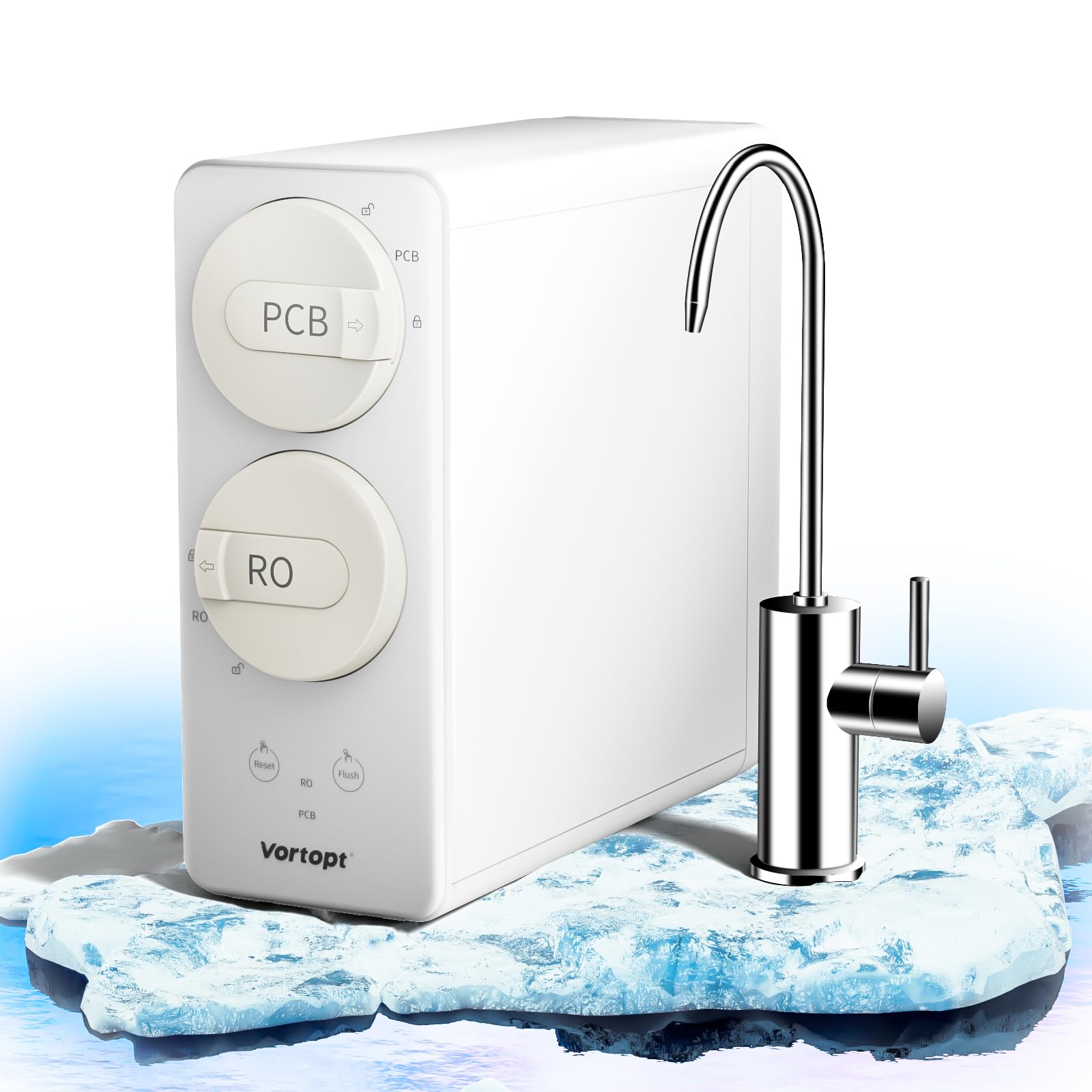
Aging municipal infrastructure often utilizes cast iron or galvanized steel pipes, some of which have been in service since the 1950s, leading to secondary contamination as water travels to residential faucets. This degradation introduces particulate matter and chemical byproducts that standard countertop pitchers, which typically rely on basic activated carbon, fail to capture at a molecular level.
A study of urban water distribution systems found that 25% of samples contained microplastics smaller than 10 microns, a size that exceeds the filtration capability of most gravity-fed devices.
Because these microscopic contaminants bypass basic filters, households require the high-pressure environment of an Under Sink water purifier to force water through semi-permeable layers. These systems operate using household water pressure—typically between 40 and 80 PSI—to drive the Reverse Osmosis process without requiring external pumps in most standard configurations.
The filtration efficiency of these units is measured by the removal of specific ions, where high-performance membranes achieve a 99% reduction rate for Fluoride and a 97% reduction for Nitrates. Such precision is necessary because chemical runoff and industrial byproducts have increased the complexity of groundwater profiles by 12% over the last decade in suburban regions.
| Contaminant Type | Removal Rate (%) | Precision (Microns) |
| Heavy Metals (Lead/Mercury) | 99.1% | 0.0001 |
| Chlorine & Chloramines | 96.5% | 0.5 - 1.0 |
| Cysts & Bacteria | 99.99% | 0.01 |
| VOCs & Pesticides | 95.0% | 0.5 |
This hardware integration allows for a "point-of-use" barrier that protects against fluctuations in municipal chlorine dosing, which can spike by 20% during seasonal water main flushing. By placing the filtration at the final exit point, the system negates any debris picked up within the home’s internal copper or PEX piping.
The physical footprint of these devices has decreased by 40% since 2018 due to the adoption of integrated waterway designs that eliminate internal tubing and potential leak points. Modern manifolds are tested to withstand 100,000 cycles of water hammer at 150 PSI, ensuring the housing remains intact under variable pressure conditions common in high-rise apartments.
Analysis of 500 residential installations shows that tankless under sink models save 0.5 cubic meters of cabinet space compared to traditional systems with separate storage vessels.
Reclaiming this space allows for the installation of larger drainage assemblies or garbage disposals, while the high-flow membranes deliver water at a rate of 1 cup every 6 seconds. This speed is essential for cooking tasks, such as filling a 4-quart stockpot, which would take over 5 minutes using a standard refrigerator dispenser.
The economic advantage of the Under Sink water purifier becomes apparent when calculating the lifecycle of the filter cartridges, which often span 1,000 to 3,000 gallons of throughput. While a portable filter might require replacement every 40 gallons, an under sink RO membrane often maintains its structural integrity for 24 months before the salt rejection rate drops below 90%.
-
Filter Longevity: PPC composite filters last 12 months, while RO membranes reach 24-36 months.
-
Wastage Ratio: Advanced systems feature a 2:1 or 3:1 pure-to-drain ratio, significantly better than the 1:3 ratios seen in 2015-era models.
-
Smart Monitoring: Integrated TDS sensors provide real-time data accuracy within +/- 5ppm, alerting users via LED indicators.
Reducing the volume of brine water sent to the drain is a primary focus of newer engineering standards, which have improved recovery rates by 50% in the last five years. This efficiency ensures that for every gallon of pure water produced, only a fraction is used to flush the membrane, making the system more sustainable for drought-prone areas.
User maintenance has been simplified through the implementation of "twist-and-pull" filter designs, allowing for a complete swap in under 30 seconds without shutting off the main water valve. This mechanical simplicity encourages regular maintenance, ensuring the system consistently operates at the 99.9% pathogen reduction level required for safe infant formula preparation.
Laboratory testing on 100 used RO membranes indicates that performance remains stable at 96% TDS removal until the final 10% of the rated gallon capacity is reached.
Maintaining this level of purity protects high-end kitchen appliances, such as espresso machines and steam ovens, from calcium carbonate buildup that causes 30% of mechanical failures in hard water regions. By removing the minerals that lead to scale, the under sink system extends the service life of these appliances by an average of 3 to 5 years.
The transition to high-capacity under sink filtration also addresses the presence of "forever chemicals" like PFOA and PFOS, which have been detected in 45% of tap water sources according to recent environmental surveys. These synthetic compounds are effectively adsorbed by the high-density carbon blocks and rejected by the RO layer, providing a level of security that bottled water—often stored in PET plastic for 6 to 12 months—cannot guarantee.
Nächster Schritt
Eine kostenlose Vor-Ort-Begutachtung Ihres Objekts vereinbaren.
© Schornböck Atelier, Rosenheim — alle Rechte vorbehalten. Reproduktion mit Quellenangabe.